
DJI Is Getting More Affordable — But Is DJI Focusing Too Much on Quantity Over Quality?
DJI has spent years building one of the strongest names in consumer drones and creator technology. From compact drones to professional aerial platforms, handheld cameras, gimbals, microphones and 360° imaging products, DJI has gradually moved beyond being “just a drone company.”
But something interesting is happening in 2026.
DJI products are becoming increasingly accessible.
Recent promotions and price reductions across several DJI product categories are making the brand more affordable for ordinary consumers and especially for content creators. DJI's recent autumn promotion, for example, included products from the Lito, Neo, Air, Avata, Mavic, Mini and other creator-focused lines.
At the same time, DJI is launching products at an extraordinary pace.
That creates an important question:
Is DJI trying to put its products into the hands of as many creators as possible — even if that means accepting compromises in accessories, packaging, thermal performance or long-term product refinement?
At Drone Fly BD, we believe this question deserves serious discussion.
DJI's New Strategy: Put Creator Technology Within Everyone's Reach
The creator economy has changed dramatically.
YouTube, Facebook, TikTok, Instagram Reels and short-form video have created millions of people who want to produce professional-looking content without carrying a cinema camera.
DJI is perfectly positioned for this market.
A creator today can potentially build an entire production setup around DJI:
DJI drone for aerial footage
Osmo Pocket for handheld vlogging
Osmo Action for action footage
DJI Mic for audio
DJI RS for camera stabilization
DJI 360 products for immersive footage
DJI smartphone gimbals for mobile content
This is no longer simply a drone ecosystem.
It is a creator ecosystem.
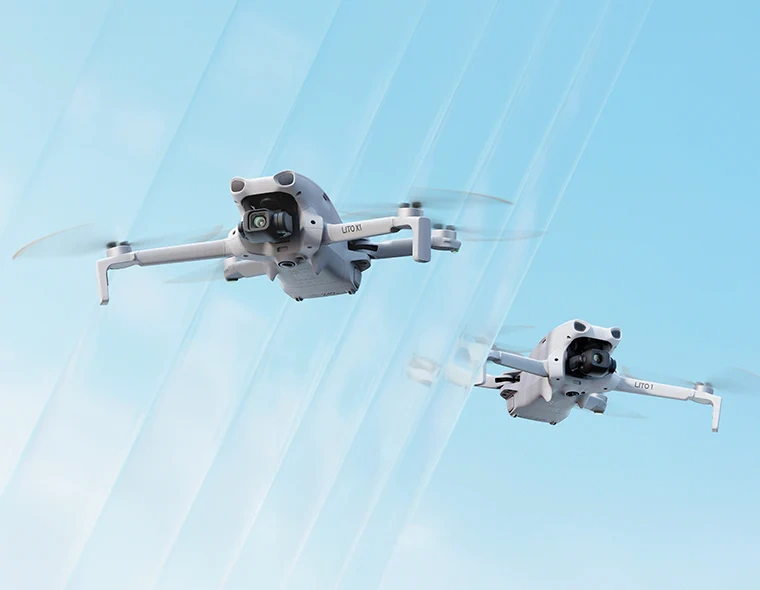
The pricing strategy also appears increasingly aggressive. DJI's Lito series, for example, was introduced as an affordable beginner-oriented drone family, with the Lito 1 and Lito X1 positioned below traditional higher-end DJI drone pricing. Independent reviews have highlighted their value proposition and accessibility.
Meanwhile, older creator products are receiving substantial discounts. The Osmo Pocket 3, for example, has recently appeared at some of its lowest recorded retail prices in major markets.
From a consumer perspective, this is excellent news.
But there is another side to the story.
Lower Prices Are Great — Until Quality Becomes the Price
There is nothing wrong with making technology affordable.
In fact, DJI deserves credit for doing exactly that.
The concern begins when cost optimization starts affecting the ownership experience.
Consumers don't only purchase specifications.
They purchase:
Reliability + durability + accessories + software + warranty + after-sales support + peace of mind.
A product can have an impressive camera, excellent stabilization and an attractive price — but if the customer encounters repeated hardware problems or struggles to obtain warranty service, the overall value proposition changes.
This is particularly important for a company like DJI because its products are increasingly being used professionally.
A creator does not buy a camera simply to keep it on a shelf.
They take it to:
weddings
travel destinations
beaches
mountains
corporate events
commercial shoots
YouTube productions
client projects
outdoor adventures
If the product fails during an important shoot, the specifications no longer matter.
Reliability becomes the most important feature.
The Packaging and Standard Package Problem
One area where the industry appears to be moving toward aggressive cost optimization is packaging and included accessories.
Consumers increasingly have to examine exactly what comes inside the box.
A “standard package” may provide the core product at a lower entry price, but some accessories that many users consider essential may be optional purchases.
This creates a difficult situation for budget-conscious consumers.
The customer sees an attractive headline price and this is particularly important in developing markets such as Bangladesh, where consumers are often extremely price-sensitive.
DJI Pocket Series: Brilliant Concept, But Thermal Management Matters
The Osmo Pocket family has become one of DJI's strongest creator products.
The concept is fantastic:
A tiny camera with professional stabilization that fits into your pocket.
The Pocket 4 continues this philosophy with a 1-inch sensor, advanced stabilization, improved tracking, built-in storage and high-end video capabilities. Reviews have generally praised its image quality and creator-focused functionality.
However, compact electronics always face a fundamental engineering challenge:
Performance creates heat.
DJI itself has published guidance specifically addressing heating and overheating behavior on the Pocket 3, Pocket 4 and Pocket 4P. DJI explains that continuous high-frame-rate recording, image processing, battery operation and the compact internal design can cause heat to accumulate. DJI also notes that under certain conditions, overheating protection can stop recording.
Independent reviews have also noticed heat during processor-intensive recording. TechRadar, for example, describes the Pocket 4P as getting overheating issue during demanding tasks, while also noting the absence of a protective case or sleeve at launch.
This does not mean the Pocket series is a bad product.
Quite the opposite.
It means that thermal engineering needs to remain a priority as DJI pushes more processing power into smaller bodies.
For creators, predictable recording time is much more important than simply having a higher specification on a product page.
The Pocket 4P Protection Question
The Pocket 4P is an interesting example of how product design and accessory strategy can collide.
The dual-camera concept is innovative, and the camera offers impressive capabilities.
But a premium creator device with a moving gimbal and exposed camera components naturally creates concerns about physical protection.
Independent testing noted that the Pocket 4P launched without a dedicated hard protective case or slim gimbal protector.
For a product that can cost a significant amount of money, customers naturally ask:
Why shouldn't basic physical protection be part of the standard ownership experience?
This is especially relevant for travelers and creators who carry the camera every day.
Lito: DJI's Attempt to Democratize the Drone
The DJI Lito series may be one of DJI's most strategically important launches.
The objective appears straightforward:
Make capable DJI aerial imaging accessible to a much larger audience.
The Lito 1 and Lito X1 are lightweight, beginner-oriented drones with advanced safety and imaging features. Independent reviews have generally praised the amount of technology DJI has put into the products for their price.
This could bring thousands — potentially millions — of new users into the DJI ecosystem.
But there is an important business principle here:
The cheaper the product becomes, the more important reliability becomes.
A beginner does not necessarily understand drone maintenance.
They may not know how to diagnose:
motor problems
gimbal errors
transmission problems
firmware conflicts
For a new user, one major failure can permanently change their perception of the brand.
Mini Series: DJI Must Protect Its Most Recognizable Consumer Brand
The DJI Mini family has become synonymous with compact consumer drones.
Its biggest strengths are:
small size + excellent camera + strong flight performance + portability.
But the Mini category is also becoming increasingly competitive.
DJI now has to differentiate between multiple affordable products while competing against brands such as Insta360 and other rapidly improving consumer imaging companies.
That creates pressure to launch faster and introduce new features.
But faster product cycles create another risk:
Consumers may begin to feel like their product becomes old too quickly.
If a customer purchases a drone today and sees another model launched shortly afterward with significant improvements or a major price adjustment, they may hesitate before buying the next DJI product.
That is a long-term brand problem.
DJI vs Insta360: The Real Battle Is No Longer Just About Specifications
One of the biggest changes in the creator-tech market is the rise of Insta360.
The competition is no longer simply:
DJI vs another drone company.
It is increasingly:
DJI vs an entire creator ecosystem.
Insta360 has aggressively expanded its cameras, 360° products and creator-focused ecosystem.
DJI has responded with products such as the Avata 360 and an increasingly broad Osmo ecosystem.
The DJI Avata 360 itself demonstrates how aggressively the market is moving. DJI positions it as an 8K/60fps 360° imaging platform with dual modes, obstacle sensing and O4+ transmission, with official regional pricing starting around the equivalent of $409 in some markets.
This competition is good for consumers.
But it creates a dangerous temptation for manufacturers:
Optimize everything.
The danger is optimizing the wrong things.
Bangladesh Has a Different Problem: After-Sales Support
For Bangladeshi consumers, the discussion is more complicated.
A DJI product may be affordable compared with previous generations, but the customer experience after purchase can be very different from buying in a country with an extensive local authorized service network.
DJI's own service-center page indicates that service availability varies by country and region.
DJI also states that warranty eligibility depends on purchasing through appropriate authorized channels, so customers should verify the seller and warranty conditions before purchasing.
For Bangladeshi customers, international warranty handling can become a logistical challenge.
When a product needs factory-level diagnosis or repair, the process may involve:
Diagnosing the problem
Opening a service request
Shipping the product internationally
Factory/service-center inspection
Repair or replacement decision
Returning the product to Bangladesh
For a customer who depends on the product for work, this is not a small inconvenience.
It can mean:
Weeks or months without the equipment.
This is one area where DJI could significantly improve the customer experience in markets where a full local service infrastructure does not exist.
The Psychology of Product Reliability
This may be the most important part of the entire discussion.
Technology companies often focus heavily on:
sales volume.
But consumers remember something different:
their experience.
Imagine 100 customers purchase a product.
90 customers have a good experience.
10 customers experience serious problems.
Those 10 customers may become much louder than the 90 satisfied customers.
They post:
Facebook complaints
YouTube videos
Reddit discussions
TikTok videos
marketplace reviews
comments under DJI advertisements
And future buyers see those complaints.
This creates what we can call a negative product perception loop.
One defective unit becomes one complaint.
Several complaints become a pattern.
A pattern becomes consumer suspicion.
Consumer suspicion eventually becomes:
“Maybe I shouldn't buy this model.”
That is extremely difficult for a premium technology brand to reverse.
DJI's Biggest Asset Is Not Its Camera Technology
It is trust.
DJI built its reputation because customers believed:
“If I buy DJI, it will work.”
That belief is more valuable than any individual specification.
A company can increase megapixels.
It can increase frame rates.
It can add AI.
It can add LiDAR.
It can add tracking.
It can launch a new product every few months.
But if consumers begin questioning reliability, the brand loses something much more difficult to rebuild.
What DJI Should Focus on Next
At Drone Fly BD, we believe DJI should consider five priorities.
1. Quality Before Launch Speed
A slightly delayed product is better than a product that reaches customers with unresolved issues.
Launch when it is ready — not simply when the competitor launches something new.
2. Better Thermal Engineering
Small creator devices need better heat dissipation.
Higher resolution and frame rates are impressive, but sustained performance matters more.
3. More Complete Standard Packages
Budget customers should not feel punished for choosing the cheaper package.
DJI should carefully evaluate which accessories are genuinely essential and include them where possible.
4. Stronger Local After-Sales Infrastructure
Countries such as Bangladesh need practical solutions for warranty handling.
Customers should not feel that buying an international-warranty product means accepting a complicated international logistics process.
5. Longer Product Lifecycles
Consumers should feel that their DJI product remains valuable for years.
Software updates, accessories, repairability and spare parts can extend the useful life of a product and strengthen customer loyalty.
Lower Prices Are Good. But Sustainable Value Is Better.
There is no question that DJI's recent pricing direction is exciting for consumers.
More affordable drones and creator cameras mean more people can create.
More creators mean more content.
More content means a larger creator economy.
And that ultimately benefits the entire industry.
But price alone cannot be the strategy.
The real winning formula should be:
Affordable + Reliable + Complete + Serviceable.
Not:
Affordable + Fast Launch + More Models.
DJI already has the technology.
It already has the brand.
It already has the creator ecosystem.
It already has millions of customers.
Now the company needs to protect the thing that made those customers choose DJI in the first place:
TRUST.
Our View at Drone Fly BD
We are big believers in DJI products.
We sell DJI because we believe the technology genuinely helps creators, businesses and professionals produce better work.
But being a DJI seller also means listening to customers.
When customers talk about price, we listen.
When they talk about accessories, we listen.
When they talk about overheating, we listen.
When they talk about warranty, we listen.
When they talk about service delays, we listen.
And when customers love a DJI product, we listen to that too.
Our view is not that DJI is becoming a bad brand.
Our view is that DJI is reaching a point where its biggest challenge may no longer be innovation.
Its biggest challenge may be maintaining quality and customer confidence while scaling its ecosystem at extraordinary speed.
The next phase of the DJI story should not simply be about putting a DJI product in everyone's hands.
It should be about making sure that when someone buys DJI for the first time, they say:
“I made the right choice.”
Because in the long run, that is how DJI beats its competitors.
And that is how a technology brand remains a leader.
Final Thought
The creator economy is growing. DJI has the opportunity to become the camera and drone brand of an entire generation.
But quantity can create customers.
Quality creates loyal customers.
And loyal customers build brands.
DJI — keep innovating. Keep lowering the barriers. Keep competing. But never let the race for the next product compromise the quality of the product already in a customer's hands.
This article represents the independent perspective of Drone Fly BD based on customer feedback, industry observations, official DJI information and recent product reviews. Individual product experiences may vary by unit, firmware, usage conditions, region and service channel.
Comments (0)
Related Posts
Drone Price in Bangladesh 2026 – Complete Buyer's Guide (DJI, GPS & Budget Drones)
Looking for drone prices in Bangladesh? This 2026 guide covers all drone categories - DJI drones, GPS drones, and budget...

DJI Mini 5 Pro Price in Bangladesh
DJI Mini 5 Pro Price in Bangladesh – Full Review & Features (2026)DJI Mini 5 Pro Price in BangladeshThe DJI Mini 5 P...

DJI Fly and DJI GO 4 Flight Record & Flight Controller Data Export Guide
DJI FlyAndroid Devices1. Connect the mobile device to the computer with the USB cable and open the disk.2. Find and open...